Yes, perimenopause can make your skin itch. As estrogen falls, skin holds less water, loses collagen and gets thinner, so it dries out and feels itchy, often on the legs, back, arms and scalp and often worse at night. The good news: gentle bathing habits, the right moisturizer and better sleep can make a real difference, and here is what has helped women most.

Disclosure: My husband, Brandon, does freelance marketing work for Immunotec, the company that makes She+. I got She+ free as an early tester.
- Itchy skin is a real perimenopause symptom. Skin has estrogen receptors, and dryness and itching are listed among the skin changes of menopause in a 2022 review in Climacteric.
- Falling estrogen means less collagen and less moisture. Dermatologists note skin loses about 30% of its collagen in the first five years of menopause.
- The fastest relief usually comes from simple habits: short, warm (not hot) showers, a fragrance-free cream on damp skin, and a humidifier at night.
- Colloidal oatmeal and moisturizers with glycerin or hyaluronic acid have research behind them for dry, itchy skin.
- Itch that lasts, keeps you up, or comes with other symptoms deserves a doctor visit, because it can also point to liver, kidney or thyroid problems.
Is itchy skin a sign of perimenopause?
It can be. When I started reading about perimenopause, I was surprised by how long the full list of perimenopause symptoms really is. Hot flashes and night sweats get all the attention, but skin changes are right there too. A 2022 expert review in Climacteric describes the skin as an endocrine organ, a direct target of hormones like estrogen, and lists dryness and pruritus (the medical word for itching) among the skin symptoms of menopause, along with thinning and slower healing.
Mayo Clinic Press also includes “your skin is itchier” on its list of lesser-known menopause changes. And when doctors at a UK menopause clinic surveyed their patients, they found a high rate of skin, hair, vulval and oral symptoms that affected quality of life, and they suspect these symptoms are often missed because women do not connect them to menopause.
So if you have been scratching your shins and wondering what changed, you are not imagining it.
Why perimenopause makes your skin itch
Estrogen does a lot of quiet work for your skin. It helps it make collagen, hold water and keep a healthy barrier. As levels start swinging and then dropping in perimenopause, a few things happen at once.
Your skin holds less water
The American Academy of Dermatology explains that skin loses some of its ability to hold water during menopause, so it can get quite dry, especially in dry air. A 2025 study in Skin Research and Technology measured this: postmenopausal women had lower skin hydration than younger women tested around ovulation, when estrogen is high. Dry skin is itchy skin.
Collagen drops quickly
According to the AAD, studies show women’s skin loses about 30% of its collagen during the first five years of menopause, then about 2% a year for the next 20 years. Thinner skin is more easily irritated and bruises more easily.
Skin gets more sensitive
The AAD also notes that skin’s pH changes around age 50, which makes rashes and irritation more likely. Products you used for years without a problem, like a scented body wash, can suddenly sting or itch.
Heat, sweat and broken sleep pile on
Many women notice the itch is worst at night. That is also when night sweats show up, and being hot, sweaty and then chilled is hard on dry skin. If you are already sleeping badly, an itch makes it even harder to settle back down. I know that cycle well. My symptoms started about a year ago with low energy, hot flashes, sleep that kept getting worse, and waking up hot and sweaty at night.
Where women feel it, and what it feels like
Reading through menopause forums, the descriptions are remarkably similar. On one long Mumsnet thread, women described itching on their lower legs and shins, back, chest, arms, scalp, ears and even inside the ear canal. Some had visibly dry skin, while others said their skin looked completely normal and still itched. A few described a crawling, insect-like feeling, which has a name: formication.
On another thread, several women said it was worst in the evening, especially after a bath, and one noticed it flared around her period. That timing makes sense when hormones are swinging from week to week.
What helps itchy skin in perimenopause
Here is what dermatologists recommend and what women say works, starting with the easiest wins.
Shorter, cooler showers
Start hereThe AAD’s tips for dry skin suggest keeping showers and baths to 5 to 10 minutes in warm, not hot, water, closing the bathroom door to keep the steam in, and patting dry instead of rubbing. Use a gentle cleanser only where you need it.
Cream on damp skin
Daily habitApply moisturizer while skin is still damp after bathing and again whenever it feels dry. Dermatologists prefer a cream or ointment over a thin lotion, with ingredients like glycerin, hyaluronic acid, shea butter, dimethicone or petrolatum. Choose “fragrance-free,” not “unscented,” since unscented products can still contain masking chemicals.
Colloidal oatmeal
SoothingIn a 2015 study, 29 women with dry, itchy lower legs used a colloidal oatmeal lotion and showed significant improvements in dryness, scaling, roughness and itch intensity. Lab tests showed oat extracts have anti-inflammatory and antioxidant activity. Oat-based products also come up again and again on the forums.
A humidifier at night
BedroomThe AAD suggests running a humidifier in your bedroom overnight, and cleaning it regularly to prevent mold. This is especially helpful in winter when the heat is on.
Soft, breathable fabrics
Easy swapLoose cotton is kinder to dry skin than tight leggings, wool or polyester. Cotton or silk pajamas also help if night sweats are part of your picture.
Collagen from the inside
SupplementA 2021 meta-analysis of 19 randomized trials with 1,125 participants (95% women) found oral hydrolyzed collagen improved skin hydration and elasticity compared with placebo, with about 90 days of use.
Don’t scratch (easier said than done)
Break the cycleThe AAD’s itch relief guide says to avoid scratching, which only makes the itch worse. Women on the forums reach for a cool cloth or ice pack instead.
Women also mention antihistamines, prescription creams and HRT on the forums. Those are worth talking through with your doctor so you get the right fit for you.
| Quick fix | Why it helps |
|---|---|
| 5 to 10 minute warm shower | Hot water strips natural oils |
| Cream within minutes of bathing | Locks in water while skin is damp |
| Fragrance-free products | Menopausal skin is more sensitive to fragrance |
| Bedroom humidifier | Dry indoor air pulls moisture from skin |
| Cotton pajamas and sheets | Breathable for night sweats, gentler on skin |
Better sleep makes everything easier
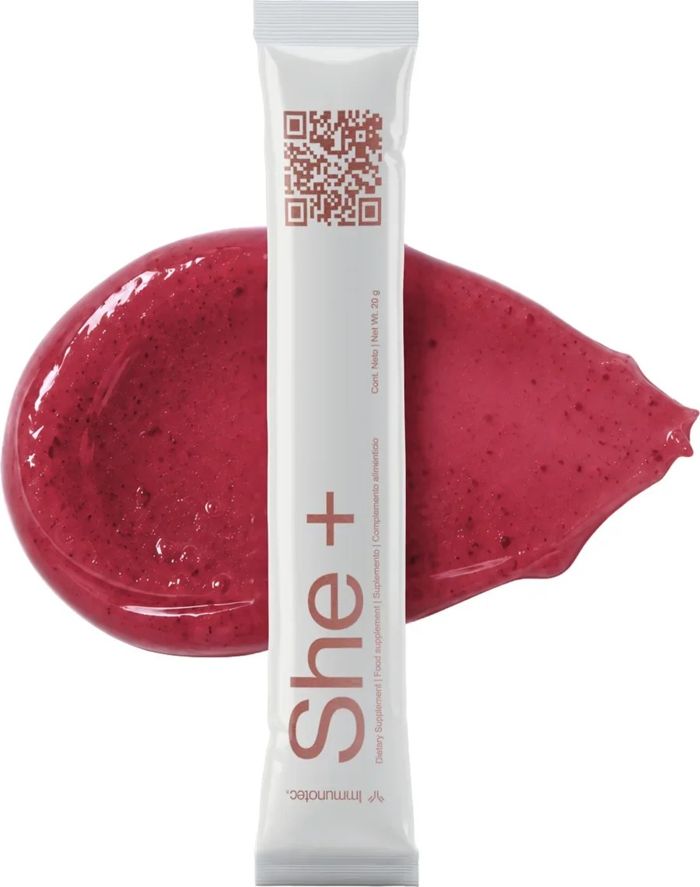
For me, the thing that changed perimenopause most was sleep. I tried magnesium first and it didn’t help me. About two months ago I started She+ by Immunotec, an apple blueberry jelly stick I take once a day. My Oura ring used to show me waking about every 10 minutes. Now my sleep scores are in the 80s and 90s, I have more energy, and my hot flashes have calmed down. I also just love the taste.
She+ is not a skin product, and I won’t pretend it is. But when you are sleeping through the night and not waking up hot and sweaty, you are not lying there noticing every itch either. I wrote about my full experience in my She+ review after two months. It is not hormone replacement therapy (HRT), and it runs about $44 a box on subscription ($59 retail).
Talk to your doctor first
Most perimenopause itch is dry skin, but itching can also be a sign of something else. The AAD notes that long-lasting itch can be linked to diabetes, kidney or liver disease, thyroid problems or blood disorders. Check in with your provider if:
- The itch lasts or keeps spreading. Especially if moisturizing for a couple of weeks hasn’t helped, or it comes with fatigue, yellowing skin or eyes, or dark urine.
- It wakes you up or you scratch until you bleed. That is worth treating properly.
- You see a new or changing spot. An itchy spot that changes should be checked for skin cancer.
- The itch is vaginal or vulvar. That has its own causes and treatments. My post on vaginal dryness in perimenopause is a good starting point.
- You are thinking about a supplement. Ask first if you are pregnant, take blood thinners, have a history of breast or uterine cancer, or have liver problems. Black cohosh, a common menopause herb, has rare reports of liver problems, so mention it to your doctor.
My take
Itchy skin is one of those perimenopause symptoms nobody warns you about, and it is a relief to learn there is a real reason for it. Start with the simple habits: shorter warm showers, a fragrance-free cream on damp skin, a humidifier at night and cotton pajamas. Give it a couple of weeks. And if your sleep is suffering too, work on that, because everything feels more manageable when you are rested. For the bigger picture on why hormones shift, my post on estrogen and hot flashes explains what is going on.
FAQ
Can perimenopause cause itchy skin with no rash?
Yes. Many women say their skin looks normal but still itches. Falling estrogen leaves skin drier and more sensitive, and that can cause itch before you see any visible dryness. If it lasts, see your doctor to rule out other causes.
Why is perimenopause itching worse at night?
Night sweats, warm bedding, dry indoor air and fewer distractions all play a part. A bedroom humidifier, cotton sheets and moisturizing before bed can help.
What does formication feel like?
Women describe it as a crawling or tingling feeling, like insects on or under the skin. It is a known menopause sensation and is worth mentioning to your provider.
What is the best moisturizer for menopausal itchy skin?
Dermatologists suggest a fragrance-free cream or ointment with ingredients like glycerin, hyaluronic acid, shea butter or petrolatum, applied to damp skin. Colloidal oatmeal products are a soothing option for itchy patches.
Does itchy skin from perimenopause go away?
For many women it eases with good skin care and as hormones settle. Building gentle habits now helps your skin through the whole transition.
Sources
- Zouboulis CC, et al. Skin, hair and beyond: the impact of menopause. Climacteric, 2022.
- Salih H, et al. Results of a patient survey exploring skin symptoms in a menopause clinic. Post Reproductive Health, 2025.
- Nikoletić ĐC, et al. Menopause, menstrual cycle, and skin barrier function. Skin Research and Technology, 2025.
- Reynertson KA, et al. Anti-inflammatory activities of colloidal oatmeal contribute to the effectiveness of oats in treatment of itch associated with dry, irritated skin. Journal of Drugs in Dermatology, 2015.
- de Miranda RB, et al. Effects of hydrolyzed collagen supplementation on skin aging: a systematic review and meta-analysis. International Journal of Dermatology, 2021.
- American Academy of Dermatology. Caring for your skin in menopause.
- American Academy of Dermatology. Dermatologists’ top tips for relieving dry skin.
- American Academy of Dermatology. How to relieve itchy skin.
- Mayo Clinic Press. Could this be menopause? Exploring lesser-known symptoms.
- Mumsnet forums: If itching was one of your menopause symptoms and The itching.
Want the full story on what I take? Read my honest She+ by Immunotec review.
This article reflects one person’s experience and is for general information only. It is not medical advice. Talk with your healthcare provider before starting any supplement.
Leave a Reply