Hot flash treatments fall into four groups: everyday cooling and lifestyle changes, herbal supplements like black cohosh and red clover, mind-body approaches, and prescription options such as hormone therapy and newer nonhormonal medicines. Here’s a calm, plain-English tour of each, with the research behind it, so you can walk into your next appointment knowing your options.
Disclosure: My husband, Brandon, does freelance marketing work for Immunotec, the company that makes She+. I got She+ free as an early tester.
- Simple cooling steps, like layers, a fan and a cooler bedroom, are the place almost everyone starts.
- Black cohosh and red clover are the most studied herbs, and meta-analyses link both to fewer hot flashes.
- I use She+ by Immunotec, a jelly stick with black cohosh, red clover and ginger. It isn’t hormone replacement therapy.
- Hormone therapy reduced hot flash frequency by 77% compared with placebo in a Cochrane review.
- Nonhormonal prescriptions include fezolinetant (Veozah), elinzanetant, low-dose paroxetine, other SSRIs and SNRIs, and gabapentin.
First, know what you’re treating
Hot flashes come from the brain’s thermostat, the hypothalamus, becoming extra sensitive as estrogen falls. A tiny rise in body temperature triggers a full cooling response. I explain that in more detail in what causes hot flashes. Every treatment below works on some part of that chain: keeping you cooler, calming the nervous system, supporting the body with plant compounds, or acting directly on hormones or brain signals.
It also helps to know they can last a while. In the SWAN study of US women, frequent hot flashes lasted a median of 7.4 years (JAMA Internal Medicine, 2015). That’s a long time to just push through, so it’s worth finding what works for you. And if you’re not sure hot flashes are your only issue, my complete list of perimenopause symptoms can help you see the bigger picture before your appointment.
Every option at a glance
| Option | What it is | How you get it | Good to know |
|---|---|---|---|
| Cooling and layers | Fans, cooler bedroom, breathable bedding, layers you can shed | At home | No cost, no side effects, works alongside anything else |
| Trigger tracking | Noting what sets off your flashes (alcohol, spicy food, hot drinks, stress) | At home | Triggers are personal |
| Black cohosh | Most studied herb for menopause | Over the counter | Rare liver reports; ask first if you have liver issues |
| Red clover | Plant isoflavones with a weak estrogen-like effect | Over the counter | Not for pregnancy; ask first with a hormone-sensitive cancer history |
| She+ by Immunotec | Jelly stick with black cohosh, red clover, ginger, glucomannan | Online | What I use; not hormone replacement therapy |
| CBT or clinical hypnosis | Structured mind-body programs | Therapist or program | Recommended by The Menopause Society |
| Hormone therapy | Estrogen, with progestogen if you have a uterus | Prescription | Very effective; risks depend on age and health history |
| Fezolinetant (Veozah) | Blocks a brain receptor (NK3) involved in temperature control | Prescription | Needs liver blood tests |
| Elinzanetant | Blocks two related brain receptors (NK1 and NK3) | Prescription | Newer option |
| SSRIs, SNRIs, gabapentin | Antidepressants at low doses; a nerve medicine | Prescription | Low-dose paroxetine is FDA-approved for hot flashes |
Summary drawn from the sources linked throughout this article. Talk with your doctor about what fits your health history.
Lifestyle and cooling: where to start
The National Institute on Aging suggests lowering the bedroom temperature, using a fan, sipping cold water before bed, layering bedding so you can adjust it, dressing in layers, carrying a portable fan, quitting smoking, keeping a healthy weight and avoiding your triggers (NIA). Cleveland Clinic adds exercising somewhere cool and managing stress (Cleveland Clinic).
There’s a reason cooling helps. Because hot flashes are set off by small rises in core temperature, steps that keep your temperature down make a flash less likely to start (J Steroid Biochem Mol Biol, 2014). I put together my full list in how to reduce hot flashes naturally.
Supplements with supporting studies
Black cohosh
Most studiedA 2023 meta-analysis of 22 studies and 2,310 women found black cohosh extracts improved hot flashes and overall menopause symptoms compared with placebo (Menopause, 2023). A small sleep trial found women taking it spent 15.8% less time awake after falling asleep (Climacteric, 2015).
Red clover
Clinically studiedA 2021 meta-analysis found about 1.7 fewer hot flashes a day compared with placebo (Nutrients, 2021), and a 2026 analysis of nine trials found a significant drop in hot flash frequency (EJOG, 2026).
Sage
Traditional useIn a 2011 Swiss trial of 71 women, a once-daily fresh sage tablet cut the intensity-weighted hot flash score by 50% in four weeks and 64% in eight weeks (Adv Ther, 2011).
More on each herb, plus evening primrose, ashwagandha and turmeric, is in my guide to herbal remedies for hot flashes.
What I use: She+
About a year ago my energy dropped, my sleep fell apart and the hot flashes started, mostly at night. Magnesium didn’t help me. About two months ago I started She+, an apple blueberry jelly stick that combines black cohosh and red clover with ginger and glucomannan. My Oura sleep scores went from constant wake-ups to the 80s and 90s, my energy came back, and my hot flashes eased a lot. I love the taste, which makes it easy to stick with.
In Immunotec’s 30-day tester group, 95% noticed changes, 59% in the first week, and sleep was the most reported improvement (78%). Individual results vary. The full story is in my She+ review.
Mind-body approaches
In its 2023 position statement on nonhormone therapy, The Menopause Society recommended cognitive behavioral therapy (CBT), clinical hypnosis and weight loss among its options for hot flashes, along with a procedure called stellate ganglion block (The Menopause Society, 2023). CBT for hot flashes is usually a short, structured program that changes how you respond to flashes and helps with sleep.
Prescription options to discuss with your doctor
Hormone therapy
Menopausal hormone therapy replaces some of the estrogen your body is making less of. Women with a uterus also take a progestogen to protect the uterine lining. It comes as pills, patches, rings, gels and creams. A Cochrane review of 21 trials found oral hormone therapy reduced weekly hot flash frequency by 77% compared with placebo (Cochrane, 2001). The NIA calls it “a very effective treatment for hot flashes” for women who can use it, and notes risks such as blood clots, stroke and breast cancer, which depend on age, timing and personal history (NIA).
Fezolinetant (Veozah)
The FDA approved fezolinetant in May 2023 for moderate to severe hot flashes from menopause. It’s a 45 mg pill taken once a day that blocks the neurokinin 3 (NK3) receptor, part of the brain’s temperature control. Because of a liver warning, the FDA calls for blood work before starting and every three months for the first nine months (FDA). In phase 3 trials, it significantly reduced the frequency and severity of hot flashes, with improvements starting after the first week (Temperature, 2025).
Elinzanetant
Elinzanetant blocks both the NK1 and NK3 receptors. Cleveland Clinic lists it among the medicines FDA-approved specifically for moderate to severe hot flashes, and it was studied over a full year in the OASIS-3 trial (JAMA Internal Medicine, 2025).
SSRIs, SNRIs and gabapentin
Low-dose paroxetine (Brisdelle) is FDA-approved for menopause hot flashes, at a lower dose than is used for depression (NIA). Doctors also prescribe venlafaxine, desvenlafaxine, escitalopram, citalopram, gabapentin and oxybutynin off-label (Cleveland Clinic). The Menopause Society includes SSRIs, SNRIs, gabapentin and oxybutynin among its recommended nonhormone options.
Talk to your doctor first if
- You have liver problems. Black cohosh has been linked to rare reports of liver injury, though a cause hasn’t been proven. Stop and call your doctor if you notice yellowing skin or eyes, dark urine or stomach pain (NIH ODS).
- You’ve had breast or uterine cancer. This affects which herbs and which prescriptions make sense for you.
- You take blood thinners. Ginger may raise bleeding risk with warfarin (BJCP, 2021).
- You’re pregnant or could be. Black cohosh, red clover and sage supplements aren’t considered safe in pregnancy.
- Your symptoms don’t fit. Drenching night sweats with fever or weight loss, or severe symptoms, should be checked, since they can have other causes.
Frequently asked questions
What is the most effective treatment for hot flashes?
Hormone therapy is the most studied and very effective for women who can use it. A Cochrane review found a 77% reduction in hot flash frequency compared with placebo. Whether it’s right for you depends on your age and health history.
What are the nonhormonal prescription options?
Fezolinetant (Veozah), elinzanetant, low-dose paroxetine, other SSRIs and SNRIs, gabapentin and oxybutynin.
Which herbs have the most research for hot flashes?
Black cohosh and red clover. Both have meta-analyses linking them to fewer hot flashes compared with placebo.
Is She+ hormone replacement therapy?
No. She+ isn’t hormone replacement therapy (HRT). It’s a daily supplement with plant extracts including black cohosh and red clover. You can read my experience in my She+ review.
Can I combine lifestyle changes with other treatments?
Yes. Cooling, layers and trigger tracking work alongside anything else. Ask your doctor before combining supplements with prescriptions.
Sources
- Duration of menopausal vasomotor symptoms over the menopause transition (SWAN). JAMA Intern Med, 2015. PubMed
- Hot flashes: what can I do? National Institute on Aging. NIA
- Hot flashes. Cleveland Clinic. Cleveland Clinic
- Freedman RR. Menopausal hot flashes: mechanisms, endocrinology, treatment. J Steroid Biochem Mol Biol, 2014. PubMed
- Black cohosh extracts in women with menopausal symptoms: an updated pairwise meta-analysis. Menopause, 2023. PubMed
- Black cohosh improves objective sleep in postmenopausal women with sleep disturbance. Climacteric, 2015. PubMed
- Clinical meaningfulness of red clover extract to relieve hot flushes. Nutrients, 2021. PubMed
- The effectiveness of red clover on hot flash in menopausal women: a GRADE-assessed meta-analysis. Eur J Obstet Gynecol Reprod Biol, 2026. PubMed
- First time proof of sage’s tolerability and efficacy in menopausal women with hot flushes. Adv Ther, 2011. PubMed
- The Menopause Society 2023 nonhormone therapy position statement (press release). The Menopause Society
- Oral oestrogen replacement therapy versus placebo for hot flushes. Cochrane Database Syst Rev, 2001. PubMed
- FDA approves novel drug to treat moderate to severe hot flashes caused by menopause. US Food and Drug Administration, 2023. FDA
- Effects of menopause on temperature regulation. Temperature, 2025. PubMed
- Elinzanetant for the treatment of vasomotor symptoms associated with menopause (OASIS-3). JAMA Intern Med, 2025. PubMed
- Black cohosh fact sheet for health professionals. NIH Office of Dietary Supplements. NIH ODS
- Warfarin and food, herbal or dietary supplement interactions: a systematic review. Br J Clin Pharmacol, 2021. PubMed
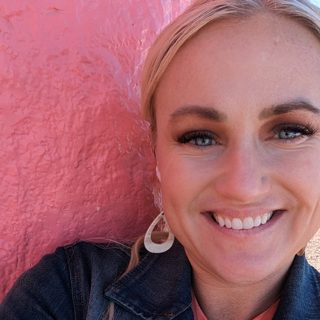
Denise Walsh
Michigan woman in perimenopause, writing about what’s actually helped her sleep, energy and hot flashes.
Jesse Ovlasuk, RN
ICU registered nurse in Grand Rapids. Reviews every post for medical accuracy and safety.
This article reflects one person’s experience and is for general information only. It is not medical advice. Talk with your healthcare provider before starting any supplement. *These statements have not been evaluated by the Food and Drug Administration. This product is not intended to diagnose, treat, cure or prevent any disease.