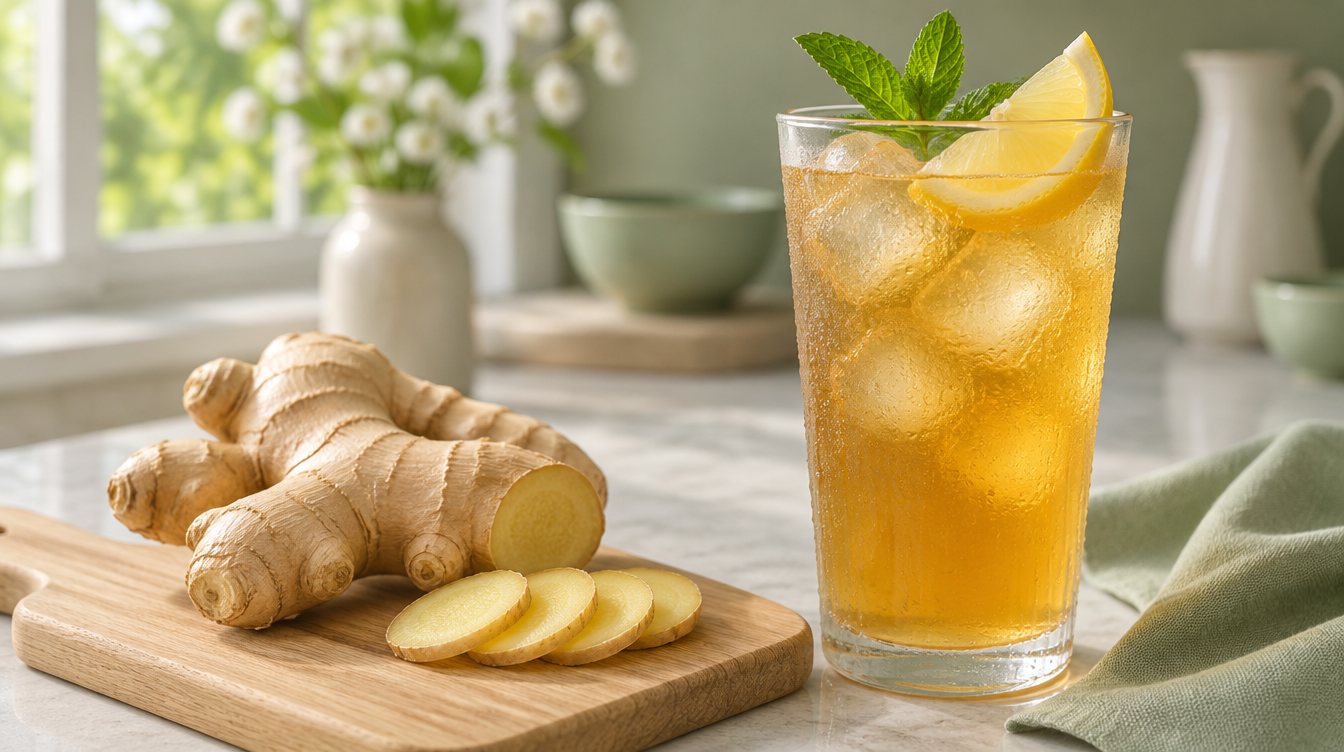
Ginger can be a helpful part of a hot flash plan, especially when it is paired with other well-studied herbs. In a 2017 randomized trial, postmenopausal women taking a capsule with ginger, saffron, cinnamon and tribulus had a significant drop in menopause symptoms compared with placebo, and a 2025 trial found ginger essential oil aromatherapy eased menopause symptoms too. Ginger is also one of the best-researched natural remedies for nausea, which many women feel right as a hot flash hits. Here is what the research shows, how women use it, and how I get mine.

Disclosure: My husband, Brandon, does freelance marketing work for Immunotec, the company that makes She+. I got She+ free as an early tester.
- Ginger shows promise for menopause symptoms in two randomized trials: one with a ginger-containing herbal capsule (80 women) and one with ginger essential oil aromatherapy.
- Ginger works best as a teammate. Most women pair it with herbs that have larger bodies of hot flash research, like black cohosh and red clover.
- Ginger is well studied for nausea, and the NIH says it may also ease menstrual cramps, both of which can tag along in perimenopause.
- Because hot and spicy foods can trigger hot flashes, cool forms (iced ginger tea, capsules or a jelly) may suit you better than a steaming mug.
- Ginger is safe for most people in food amounts, but check with your doctor first if you take a blood thinner like warfarin.
Why I started paying attention to ginger
My perimenopause symptoms started about a year ago. First it was low energy and sleep that kept getting worse, then the hot flashes, and then nights where I woke up hot and sweaty. I tried magnesium first because so many women recommend it, and it just didn’t help me.
About two months ago I started taking She+ by Immunotec, a daily apple blueberry jelly stick. When I read the label, I noticed ginger sitting right next to black cohosh and red clover, and I wanted to know why it was there. So I dug into the research, and this post is what I found. (If you want the full story of my two months, it’s all in my She+ review.)
Does ginger help with hot flashes?
The encouraging research on ginger for menopause comes from studies where ginger is used alongside other plants, or as aromatherapy. Here are the two most relevant trials.
Ginger herbal blend
2017 trialIn a triple-blind, placebo-controlled trial, 80 postmenopausal women aged 50 to 60 took either a capsule containing ginger, saffron, cinnamon and Tribulus terrestris, or a look-alike placebo, twice a day for four weeks. The researchers measured symptoms with the Menopause Rating Scale, which includes hot flashes and sweating, and found a statistically significant improvement in the herbal group compared with placebo (Menopause Review, 2017).
Ginger aromatherapy
2025 trialA randomized clinical trial in menopausal women tested 20-minute daily aromatherapy sessions with ginger essential oil, lemongrass essential oil, or both, for four weeks. All three groups had statistically significant reductions in menopause symptoms, and the authors concluded that ginger and lemongrass aromatherapy is effective for easing them (African Journal of Reproductive Health, 2025).
Ginger pairs well with black cohosh and red clover
If you want an herb with a deep stack of hot flash research behind it, black cohosh and red clover are the two that come up again and again in my roundup of herbal remedies for hot flashes.
- Black cohosh: A 2023 meta-analysis of 22 studies and 2,310 women found improvements in hot flashes and overall menopause symptoms compared with placebo (Menopause, 2023). I wrote a whole guide to black cohosh for menopause if you want the details.
- Red clover: A 2021 meta-analysis found red clover reduced hot flashes by about 1.73 a day compared with placebo, with the biggest benefit in women who had five or more a day (Nutrients, 2021).
Ginger rounds out a pairing like that with its own strengths, which brings me to the part of the ginger story that has the most science behind it.
What ginger is really good at: nausea, cramps and inflammation
Nausea, including the kind that comes with a hot flash
This surprised me: nausea can show up with hot flashes. In one Mumsnet thread, a woman in her late 40s described hot flushes along with tiredness and nausea, and another poster said her nausea often arrived just as a flush was starting. Someone in the same thread asked whether morning sickness remedies like ginger tea might help.
Ginger has real research here. The National Center for Complementary and Integrative Health says ginger may be helpful for the nausea and vomiting of pregnancy. A meta-analysis of 14 trials and 1,417 people found that ginger lowered nausea severity after surgery compared with placebo (Journal of Nursing Scholarship, 2021). And a 2025 review of 35 trials found ginger capsules added to standard anti-nausea medicine reduced severe nausea during chemotherapy (Cancer Nursing, 2025).
So if your flashes come with a queasy wave, ginger is a very reasonable thing to keep on hand. You can read more about why flashes happen in my guide to what causes hot flashes.
Cramps during irregular periods
Perimenopause periods can be unpredictable, and some months the cramps come back with a vengeance. NCCIH notes that research suggests ginger supplements may reduce how severe menstrual cramps are, and a 2026 meta-analysis found plant-based remedies (ginger among them) eased period pain compared with placebo and worked about as well as common pain relievers like ibuprofen in head-to-head trials (Phytotherapy Research, 2026).
Antioxidant and anti-inflammatory support
Ginger’s two main active compounds, 6-gingerol and 6-shogaol, have been studied for their ability to lower oxidative stress and inflammation, which researchers link to many age-related health concerns (review, Evidence-Based Complementary and Alternative Medicine, 2019). That is a nice bonus in midlife, when we are thinking about heart, joints and long-term health.
How to use ginger without heating yourself up
Here is one practical tip I wish someone had told me. Mayo Clinic lists hot and spicy foods, caffeinated drinks and alcohol as common hot flash triggers, and notes that even slight increases in your core temperature can set one off. Ginger is famous as a warming spice. In one small study, women who drank a ginger beverage had warmer hands for longer than after a placebo drink, which is lovely if you get cold fingers, but worth knowing if heat sets you off.
The easy fix is to choose cooler forms:
| Form | Why it works well during perimenopause |
|---|---|
| Iced ginger tea | All the ginger, none of the steam. Brew it, chill it, and keep a jug in the fridge. |
| Capsules or extracts | A measured amount with no hot liquid at all. |
| A ginger-containing jelly or chew | Easy to take at room temperature, and often combined with other herbs. |
| Fresh ginger in cool dishes | Grate it into smoothies, salad dressings or yogurt instead of spicy hot curries. |
| Ginger essential oil | Used in the 2025 aromatherapy trial. Diffuse it or inhale it; do not swallow essential oils. |
Other cooling habits women swear by fit right alongside ginger. In a long Mumsnet thread about what helps hot flushes, women shared cotton bedding, separate duvets, a cooling pillow, sage tea and cutting back on red wine. For more ideas, see my list of ways to reduce hot flashes naturally.
How ginger fits into my routine
I don’t drink ginger tea or take a separate ginger pill. The ginger I get comes in my daily She+ stick, along with black cohosh extract, red clover extract and glucomannan, a konjac fiber. I take one a day, and honestly, I look forward to it because the apple blueberry flavor is so good.
Since starting it about two months ago, I’m sleeping better. My Oura ring used to show me waking about every 10 minutes, and now my sleep scores are in the 80s and 90s. I have more energy, and my hot flashes have eased. That is just my experience, and every body is different.
“I sleep deeply and have lots of energy. I’ve noticed I’m not getting irritated so easily anymore.”Silvia V., She+ tester. Individual results vary.
She+ is not hormone replacement therapy (HRT). It is a daily supplement, and it runs about $44 a box on subscription ($59 retail). I go through the good, the price and what changed for me in my honest She+ review after two months.
Talk to your doctor first
- Blood thinners: A large review of warfarin interactions listed ginger among foods and herbs that may raise bleeding risk (British Journal of Clinical Pharmacology, 2021). If you take warfarin or another blood thinner, ask before adding ginger supplements.
- Stomach upset: NCCIH notes ginger can cause abdominal discomfort, heartburn or diarrhea in some people. Starting small and taking it with food helps.
- Black cohosh combos and your liver: If your ginger product also contains black cohosh, the NIH Office of Dietary Supplements notes reports of liver problems without proof that black cohosh caused them, and advises people with liver disorders to avoid it.
- Pregnancy: Perimenopause pregnancies happen. Check with your provider before using herbal supplements if you could be pregnant.
- Breast or uterine cancer history: Talk with your oncologist before starting any menopause supplement, especially one with red clover or black cohosh.
The bottom line
Ginger is a smart, gentle addition to a hot flash plan. It shows promise for menopause symptoms in trials where it is paired with other herbs or used as aromatherapy, and it has strong research for nausea and cramps, two things that can ride along with perimenopause. Pair it with well-studied herbs like black cohosh and red clover, take it in a cool form, and keep an eye on the full list of perimenopause symptoms so you know what else might be part of the picture.
Frequently asked questions
Does ginger help with hot flashes?
Ginger has shown promise for menopause symptoms in randomized trials, including a 2017 trial of a ginger, saffron, cinnamon and tribulus capsule and a 2025 trial of ginger essential oil aromatherapy. Many women use it alongside black cohosh and red clover, which have larger bodies of hot flash research.
Can ginger make hot flashes worse?
Hot and spicy foods are a common trigger, so a steaming, spicy ginger drink could set some women off. Iced ginger tea, capsules or a jelly let you get the ginger without the heat.
Is ginger tea good for menopause nausea?
Ginger is one of the best-researched natural remedies for nausea, and NCCIH says it may help nausea and vomiting in pregnancy. If you feel queasy with your hot flashes, sipping chilled ginger tea is a gentle thing to try.
How much ginger should I take?
Amounts vary a lot between studies and products. Follow the label of the product you choose, and ask your doctor or pharmacist if you take other medicines, especially a blood thinner.
Is there a menopause supplement with ginger in it?
Yes. She+ by Immunotec combines ginger extract with black cohosh, red clover and glucomannan in an apple blueberry jelly stick. Some other menopause formulas include ginger too, so check the label for the full ingredient list.
Sources
- Effect of Tribulus terrestris, ginger, saffron, and Cinnamomum on menopausal symptoms: a randomised, placebo-controlled clinical trial. Przeglad Menopauzalny, 2017.
- The effect of ginger essential oil, lemongrass essential oil and their combination on symptoms of menopausal women. African Journal of Reproductive Health, 2025.
- Black cohosh meta-analysis. Menopause, 2023.
- Red clover and hot flashes meta-analysis. Nutrients, 2021.
- Ginger. National Center for Complementary and Integrative Health.
- Efficacy of ginger in preventing postoperative nausea and vomiting: a systematic review and meta-analysis. Journal of Nursing Scholarship, 2021.
- Efficacy and safety of ginger on chemotherapy-induced nausea and vomiting: a systematic review and meta-analysis. Cancer Nursing, 2025.
- Efficacy of plant-derived therapies for primary dysmenorrhea: a systematic review and meta-analysis. Phytotherapy Research, 2026.
- Ginger in the prevention of ageing and degenerative diseases: review of current evidence. Evidence-Based Complementary and Alternative Medicine, 2019.
- Hyperthermic effect of ginger extract-containing beverage on peripheral skin surface temperature in women. Evidence-Based Complementary and Alternative Medicine, 2018.
- Hot flashes: diagnosis and treatment. Mayo Clinic.
- Warfarin and food, herbal or dietary supplement interactions: a systematic review. British Journal of Clinical Pharmacology, 2021.
- Black Cohosh: Fact Sheet for Health Professionals. NIH Office of Dietary Supplements.
This article reflects one person’s experience and is for general information only. It is not medical advice. Talk with your healthcare provider before starting any supplement.
Leave a Reply