In the US, menopause starts at an average age of about 51 to 52, and most women reach it somewhere between 45 and 55. Perimenopause, the transition with the hot flashes and irregular periods, usually begins in your 40s, years before that. Here’s what the research says about the average age, the normal range, what can make menopause come earlier or later, and the early signs to watch for. I’ll also share what has helped me through perimenopause, including She+ by Immunotec.
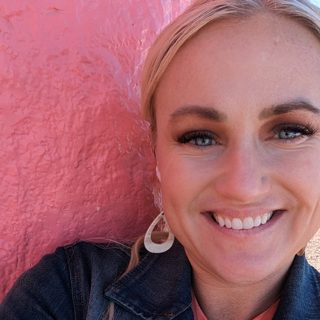
Disclosure: My husband, Brandon, does freelance marketing work for Immunotec, the company that makes She+. I got She+ free as an early tester.
- The average age of menopause in the US is 52 according to the National Institute on Aging, and about 51 according to Mayo Clinic.
- Most women reach menopause between 45 and 55. Before 45 is early, and before 40 is premature.
- Perimenopause usually starts in the mid-40s and lasts about four years on average.
- Family history and smoking are two of the clearest influences. Smokers reach menopause 1 to 2 years earlier.
- Your mother’s or sister’s age at menopause is a useful clue, so it’s worth asking.
The average age of menopause
Menopause is the point when you’ve gone 12 months in a row without a period. Here’s what the major US sources say about when that happens:
| National Institute on Aging | Average age 52 in the US; most women start the transition between 45 and 55 (NIA) |
|---|---|
| US Office on Women’s Health | Average age 52; the transition usually happens between 45 and 55 (OWH) |
| Cleveland Clinic | On average at 52 (Cleveland Clinic) |
| Mayo Clinic | Natural menopause at about 51 (Mayo Clinic) |
| SWAN study | Median age 52.54 at the final period, in 3,302 women from seven US sites (Am J Epidemiol, 2013) |
So when you see “51” in one place and “52” in another, both are right. The exact figure depends on the group studied and how it’s measured. The takeaway is the same: the early 50s is typical.
The normal range
Cleveland Clinic considers natural menopause anywhere between about 45 and 55 to be normal (Cleveland Clinic). Outside that window, doctors use specific terms:
| Term | Age | How common |
|---|---|---|
| Premature menopause | Before 40 | About 1 in 100 women |
| Early menopause | Before 45 | About 1 in 20 women |
| Typical menopause | About 45 to 55 | Most women |
Source: Cleveland Clinic. If you’re under 45 and your periods have stopped, see my guide to premature and early menopause.
Perimenopause starts years earlier
Most women don’t feel “menopause.” They feel perimenopause, the transition before it. Cleveland Clinic says perimenopause usually starts in the mid-40s, about eight to 10 years before menopause, and can begin as early as the mid-30s. It lasts about four years on average and up to eight (Cleveland Clinic). The Office on Women’s Health puts the start in the mid- to late 40s for most women, with some noticing symptoms in their late 30s.
That’s why so many women in their 40s are surprised by hot flashes, broken sleep or irregular periods. It’s not early. It’s right on schedule. My own symptoms started about a year ago: low energy first, then sleep trouble, then hot flashes and sweaty nights. The stages are explained in my perimenopause vs menopause guide.
What affects when menopause starts
Your age at menopause is shaped by your genes, health history and some lifestyle factors. NIA notes timing varies with genetics, race and ethnicity, culture, lifestyle and environment (NIA).
Family history
Strong clueA family history of early menopause makes it more likely for you (Mayo Clinic). Cleveland Clinic specifically lists a biological mother or sister who had early menopause as a risk factor. If you can, ask the women in your family when theirs happened.
Smoking
1 to 2 years earlierMayo Clinic says menopause happens 1 to 2 years earlier in women who smoke than in women who don’t. Cleveland Clinic calls smoking the only lifestyle factor linked to early menopause, and NIA links it with more severe symptoms too.
Cancer treatment
MedicalChemotherapy and pelvic radiation have been linked to early menopause (Mayo Clinic).
Surgery
MedicalRemoving both ovaries brings on menopause right away. A hysterectomy that keeps the ovaries usually doesn’t cause immediate menopause, but it can sometimes lead to an earlier one, and if one ovary is removed the other may stop working sooner (Mayo Clinic).
Health conditions
MedicalThyroid disease, rheumatoid arthritis and other autoimmune diseases are linked to earlier menopause (Mayo Clinic). Cleveland Clinic also lists a first period before age 11.
What the SWAN study found
The SWAN study followed 3,302 women for about a decade. Later menopause was associated with not smoking, higher education, past birth control pill use, higher weight at the start of the study, being employed and better self-rated health (Am J Epidemiol, 2013). These are associations, not instructions. Nobody should start or stop anything just to move their menopause date. But they do show that quitting smoking is one of the few factors fully in your control.
Early signs that menopause is getting closer
Irregular periods are usually the first clue. Mayo Clinic says a cycle length that keeps changing by 7 days or more suggests early perimenopause, and going 60 days or more between periods suggests late perimenopause. Other early signs include:
- Hot flashes and night sweats, which up to 80% of women have at some point during the transition (The Menopause Society)
- Sleep trouble. 56% of perimenopausal women sleep less than 7 hours (CDC)
- Mood swings, irritability and low energy
- Brain fog and trouble focusing
- Vaginal dryness and bladder changes
See my guide to the early signs of perimenopause, or the full perimenopause symptom list.
Feeling better, whatever your age
Whenever your transition starts, you don’t have to just put up with it. Lifestyle basics help: a cool bedroom, daily movement and knowing your triggers. Black cohosh is the most studied herb for menopause, and a 2023 meta-analysis of 22 studies and 2,310 women found it improved hot flashes and overall symptoms compared with placebo (Menopause, 2023). Red clover has its own research, with about 1.7 fewer hot flashes a day in a 2021 analysis (Nutrients, 2021). Prescription options include hormone therapy, fezolinetant (Veozah), SSRIs and gabapentin, which you can discuss with your doctor.
For me, She+ has made the biggest difference. After about two months, my sleep scores went from constant wake-ups to the 80s and 90s, my energy came back and my hot flashes eased. Individual results vary. I cover everything, including the ingredients, in my She+ review.
When to talk to your doctor
- Periods stopping or changing before 45. Mayo Clinic suggests an evaluation if your periods stop or change noticeably for three cycles before 45 (Mayo Clinic).
- Bleeding after menopause. Any bleeding after 12 months without a period should be checked right away.
- Heavy or very frequent bleeding. Bleeding for more than seven days, between periods, or cycles less than 21 days apart.
- Severe night sweats. Especially with fever or weight loss.
- Before starting a supplement. Ask first if you have liver problems, a history of breast or uterine cancer, take blood thinners, or could be pregnant. Stop black cohosh and call your doctor if you notice yellowing skin or dark urine (NIH ODS).
Frequently asked questions
Is it normal to start menopause at 45?
Yes. Menopause between about 45 and 55 is considered natural. Before 45 is called early menopause.
Will I go through menopause at the same age as my mother?
Not necessarily, but family history is a real influence. If your mother or sister had early menopause, your chances are higher.
What’s the latest age menopause can start?
Most women reach it by 55, and perimenopause can last into the mid-50s. If you’re still having periods well past that, mention it to your doctor.
Does smoking really change the age of menopause?
Yes. Mayo Clinic says smokers reach menopause 1 to 2 years earlier than nonsmokers.
Is She+ hormone replacement therapy?
No. She+ isn’t hormone replacement therapy (HRT). It’s a daily jelly stick with black cohosh, red clover, ginger and glucomannan. More in my She+ review.
Sources
- What is menopause? National Institute on Aging. NIA
- Menopause basics. US Office on Women’s Health. OWH
- Menopause. Cleveland Clinic. Cleveland Clinic
- Perimenopause. Cleveland Clinic. Cleveland Clinic
- Premature and early menopause. Cleveland Clinic. Cleveland Clinic
- Perimenopause: symptoms and causes. Mayo Clinic. Mayo Clinic
- Women’s wellness: 5 things you need to know about early menopause. Mayo Clinic News Network. Mayo Clinic
- Gold EB, et al. Factors related to age at natural menopause: longitudinal analyses from SWAN. Am J Epidemiol, 2013. PubMed
- Perimenopause. The Menopause Society. The Menopause Society
- Sleep duration and quality among women aged 40 to 59, by menopausal status. CDC NCHS Data Brief 286. CDC
- Black cohosh extracts in women with menopausal symptoms: an updated pairwise meta-analysis. Menopause, 2023. PubMed
- Clinical meaningfulness of red clover extract to relieve hot flushes. Nutrients, 2021. PubMed
- Black cohosh fact sheet for health professionals. NIH Office of Dietary Supplements. NIH ODS
This article reflects one person’s experience and is for general information only. It is not medical advice. Talk with your healthcare provider before starting any supplement.